
How the Housing Crisis Is Fucking Up the Kids
Housing got expensive and the culture got weird

Note from Jeff: Longtime readers know I’m a materialist — I believe our culture, our politics, and our psychology are downstream of the material conditions in which we live. In a recent post, I argued that the breakdown of the American housing model is having dire social consequences for the younger generations. But I’ll admit that I got to the water’s edge and stopped short. For as sure as I am that there’s a line from single-family zoning to looksmaxxing, there’s a lot of terrain there that, for me, is academic. So, I asked for help.
Hanna Horvath is a financial planner and the writer behind Your Brain on Money, a newsletter about the psychology and culture of living through an economy that no longer works the way we say it’s supposed to. I asked her to take my argument the rest of the way; happily, she obliged.
As a financial planner, I spend my days sitting across from clients and helping them make sense of their money. I have never — not once — had a client under 40 tell me they feel on track.
It almost doesn’t matter how much money they make or the number in their bank account. It’s more about this low-grade hum underneath everything: that the math isn’t mathing, and something about the deal they were promised has quietly changed.
And in many ways, it has.
What happens when an entire generation of kids believe they’ll never be able to afford a home?
Median home prices in the U.S. sit around $410,000, which means you’d need an annual income of around $120,000 to afford it. The median age of a first-time homebuyer is 40. Wages have grown — but not nearly at the rate housing costs have, and not in the places where the jobs are. Layer student loan debt on top (the average Gen Z borrower carries $24,000 to $35,000), and the math completely stops working.
These are also the people who came of age watching their parents lose homes in 2008, graduated into a pandemic economy, and entered a housing market where prices had roughly doubled since 2012. They arrived at pessimism through observation.
Nearly two-thirds of Gen Z believe they will never be able to afford a home in their lifetime.
This is a housing affordability problem and a cost-of-living problem, yes, but it’s also a trust problem. This is a generation that has watched institutions fail — banks, government, the labor market, the housing market — and drawn the reasonable conclusion that the system is not designed to work for them. The financial system doesn’t feel like a ladder to climb. It feels like a game where the rules keep changing and nobody’s telling you.
When the structural conditions are this broken, they reshape how an entire generation sees the world. They reshape what feels worth planning for, what feels worth sacrificing for, what feels worth believing in. The economic environment shapes how you see your reality, and what’s financially possible.
There’s a researcher named Sendhil Mullainathan who spent years studying what scarcity does to the brain, or the cognitive experience of not having enough of something you need.
His finding: When a critical resource feels permanently out of reach, your brain narrows. It stops planning for later and starts optimizing for now. Not necessarily because you’re impulsive or bad with money — because your cognitive bandwidth has been consumed by the emergency of the present. This helps explain consumer trends like “doom spending” or “little treat culture”.
But the scarce resource here isn’t necessarily money. It’s also the belief that the future will be better than the present. And when that belief disappears, your brain does exactly what Mullainathan would predict: it narrows to the present, where effort still produces a result.
There’s a concept in financial psychology called a money script — the inherited, usually unspoken beliefs about money that run in the background of your decisions like the operating system of a computer. Most Americans grew up running the same one: work hard, save up, buy a house, watch it appreciate, build equity, retire. (AKA, the good old American Dream).
When the script stops working but nobody hands you a new one, you get an identity crisis. Your brain resolves the dissonance the way brains do — either by blaming yourself (shame, avoidance, the paralysis) or by rejecting the premise entirely.

The behavior downstream of all this has a name: financial nihilism. It’s a set of rational-feeling responses to conditions that feel irrational. It shows up in a few ways:
Doom spending. Why skip the $7 fancy donut when the $70,000 down payment is a fantasy? A University of Chicago and Northwestern study found that as someone’s perceived probability of homeownership falls, they consume more relative to their wealth. Remove the incentive to save for a house and people stop saving.
Gambling. Forty-two percent of Gen Z investors hold crypto. Eleven percent hold a retirement account. Fortune coined “disillusionomics” to describe a generation turning to prediction markets, meme coins, and side hustles. When slow-and-steady can’t get you to a house anyway, a long-shot bet starts to feel like the more rational move.
Opting out. Some have reduced their effort at work entirely — reasoning that if high performance doesn’t yield long-term financial security, the sacrifice isn’t worth the cost.
Status games. When the conventional markers — house, career ladder, retirement account — feel inaccessible, people find new (and less financially helpful) ways to communicate status). Looksmaxxing. The obsessive optimization of every micro-decision. These are arenas where effort still connects to outcome — where inputs produce visible outputs in a way that something like the housing market no longer does.
Comparison spiral. Wealth is relative, and social media has collapsed much of the distance between classes, making everyone feel more behind financially. This is known as positional precarity, and it explains why people making $200K who feel like they’re failing because the life six figures was supposed to buy doesn’t exist at that price point anymore. The feeling of falling behind doesn’t track neatly to income. It tracks to the gap between what you were trained to expect and what the economy actually delivers.
And that gap — between self-concept and lived experience — is doing enormous psychological work. It’s producing a generation-wide cognitive dissonance that looks, from the outside, like nihilism. But from the inside, it’s a rational response to a set of structural conditions that nobody asked for and nobody voted on.

Financial planning is built on the assumption that disciplined behavior over time produces predictable results. But when the biggest line item in the American wealth-building formula is inaccessible to the people being told to be disciplined, the whole framework starts to feel like something I’m selling rather than something I believe.
It is very hard to convince someone to plan for the future when the future has been priced out of their range.
Our current environment produces economic precarity, yes, but also psychological precarity — a rewiring of how an entire generation relates to money, work, risk, and the future. The emotional and psychological fallout of the housing crisis is not a sideshow to the policy conversation. It is the policy conversation, or it should be.
The model is broken and it’s doing more and more damage to each new wave of young people entering adulthood. And the longer we treat a structural failure as a generational character flaw, the longer we delay building something that actually works.
 | A guest post by
|
We could do things to make housing cheaper, and we should. But I fear that the underlying problem is a prosperity crisis, not just a housing crisis. The decades of prosperity after World War II established an unrealistic norm, based on historical events that won't be repeated.
Two things have made housing even more unaffordable in the U.S.: Single family zoning codes and autocentric cities.
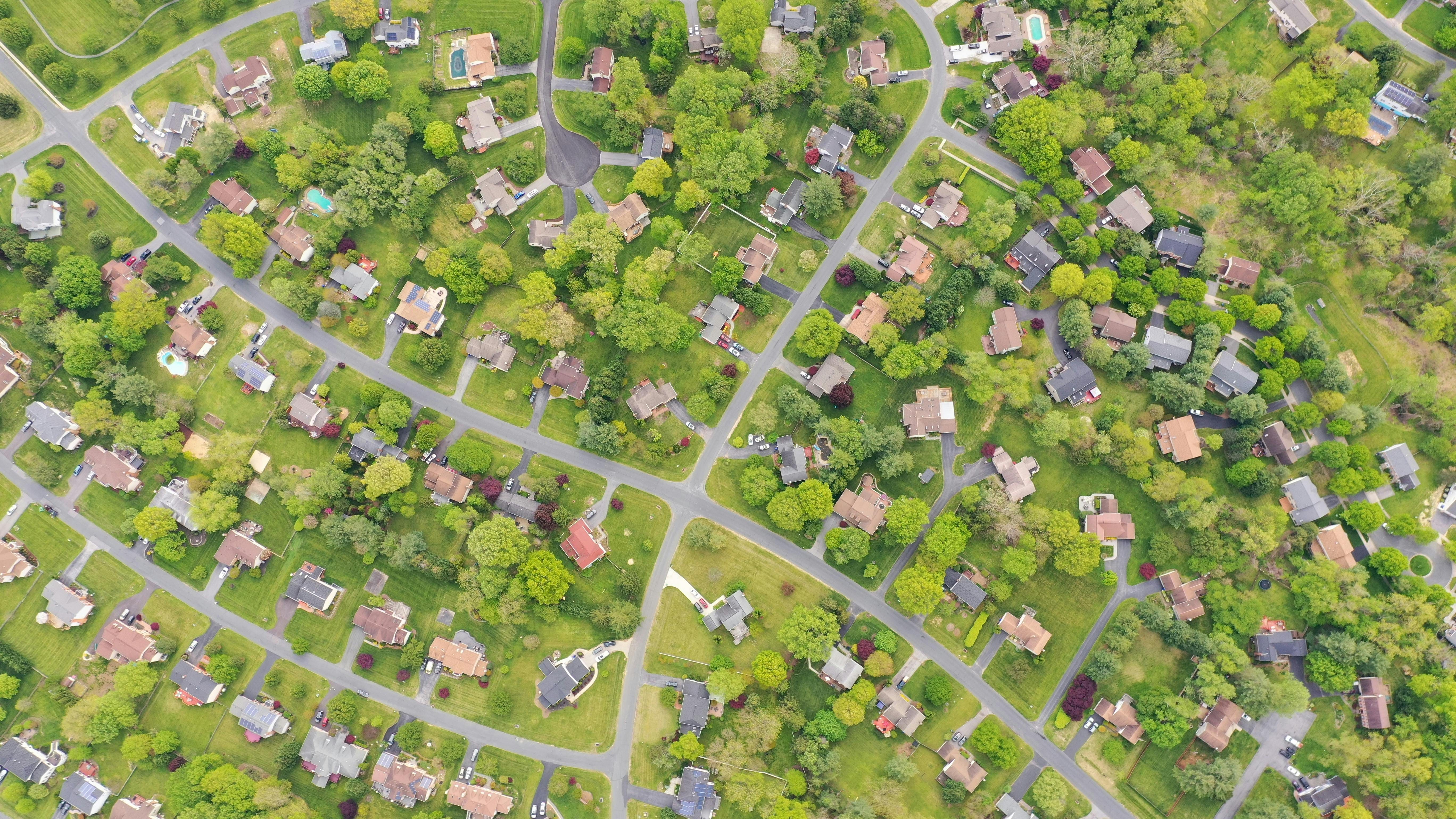
Many zoning codes outlaw smaller housing, smaller lots, and condos, limiting housing supply and increasing price. Our transportation networks are excessively reliant on automobiles, too. Most people need a car (and $400+/month car payments) just to live. These things are unique to American cities. In Europe or Japan, you can buy a cheaper apartment and have a high quality of life just taking transit. Here, public policy compounds the affordability crisis.