
We can never go back
In search of lost places

I am from the greatest city ever built below sea-level. It wasn’t Atlantis. Neither was it Amsterdam. It was New Orleans, the steam-drenched city of worldly delights.
I was born in New Orleans in the late 80s, but my family left when I was three in search of better economic prospects. We were of modest means, and my father was concerned that I would never become literate attending the local public schools.
Even though we left, I returned often throughout my childhood to visit my grandmother, my Mimi. Looking back on those trips, I do wonder if my experience was a bit like my first-gen American friends getting taken back to some old country to visit the generation that stayed behind. That’s not meant to trivialize my friends’ experiences, mind you; flying back to Taiwan or down to Brazil is a much bigger ordeal than six hours in a car on I-10. And yet, New Orleans has always felt a place apart.
The city itself predates the American Declaration of Independence and passed from French to Spanish possession before falling under U.S. control. But as fascinating as I find the history now, the city’s singularness was embodied in the tangible experiences of my childhood.
New Orleans is rightfully known for its food. My memories are replete with smells of olive salad spread all over the sesame seed-encrusted Italian loaf bun of a muffuletta, or the cloyingly sweet taste of a praline dissolving into sugary sand and pecans in my mouth.1
Then there were the sounds.
I don’t often express unqualified opinions, but I’ll venture one here: New Orleans is the greatest city for street music that has ever existed. Walking around the French Quarter, you can go from listening to a classically-trained cellist on one corner to the most talented percussionist you’ve ever heard plying their trade on an arrangement of plastic buckets on the next. When I visit those memories, I can still feel the cobblestones under my feet and the sounds of the music swimming through air so thick with humidity the drumbeats may as well have been traveling through the ocean.
But for all the poetry I can muster to tell you about the city of my birth and countless childhood trips…at the end of it all, this is an elegy.
The place I’ve described no longer exists, and not because of some specific cataclysm or social malaise. It’s because a city isn’t merely a place; a city is also a moment.2
Cities, at least in the way we experience them, are like music. They are ever-changing and ultimately ephemeral. To be sure, they have their more constant elements, their refrains, the motifs they go back to time and again. But just like a human life, they’re not so much a thing as they are a process.
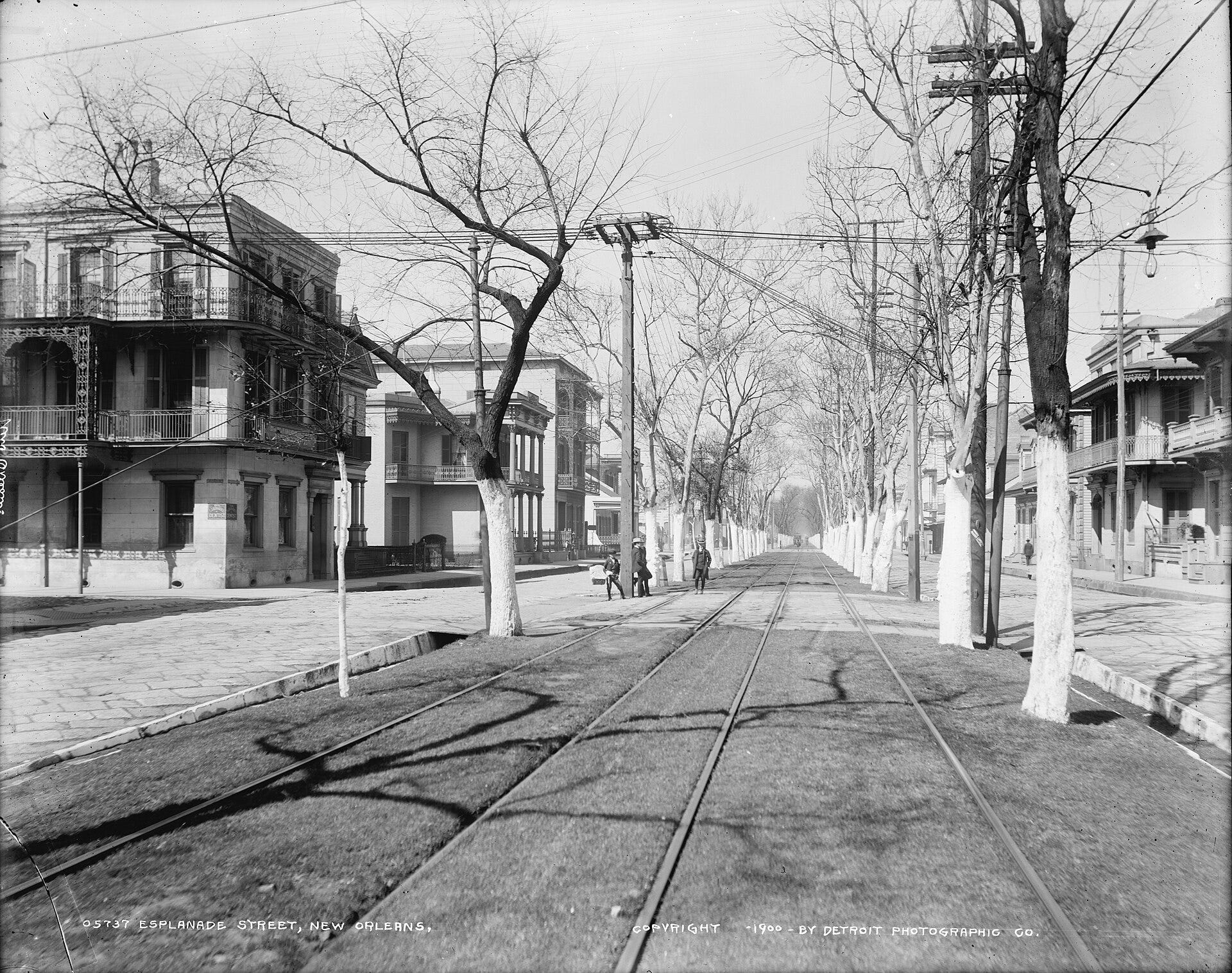

The last time I went back to New Orleans was a year or two before the pandemic. My Mimi was already years gone, and with her, most of my familial ties to the place. Sure, the air was still heavy, the music was still great, and the sidewalks in the quarter were still sticky with sugar and booze. But for all that, there’d be no meal in Bucktown or trip to the Audubon Zoo or retelling of the same story about Aunt Blanche for the ten-thousandth time. The things that were the same only served to remind me of everything that wasn’t, like visiting the set of a play after the performance was over but before they’d finished breaking down the stage.
It’s here that I’m left grasping for a specific scene, a moment, in which the realization of loss hit me like a thunderbolt. But there never was such a moment for me. In a way, the feeling sneaks up on you. You go back to a place and you realize all the things, big and small, that are different. It’s like listening to a song, getting distracted doing something, and then not realizing the music stopped playing until five minutes later.
But even that’s not quite right. It’s not that the music has stopped; it’s just that an entirely new song has started playing. So, maybe, in a way, it feels like not getting to say goodbye to the old and only realizing something’s passed once you’ve already been introduced to the new. At the time, I wasn’t sure I knew what to think, let alone how to feel, about that.
Maybe I do now.
The difference between medicine and poison is often a matter of dose. The same is true for nostalgia. Given no countervailing force, it will fill up a soul and sour into a backward-facing melancholy. The opposing force is simply optimism for the future and a vision of what better might actually look like.
That realization has been, for me, a palliative. Not for nostalgia on the whole (after all, everyone experiences that, and it’s a fully valid part of the human experience), but for the kind of grief that runs through the veins and turns the blood black. And yes, perhaps I’ve strayed beyond speaking narrowly of cities, and places, and moments, but the observation remains the same: the things we love, be they places or anything else, are never static. To truly love a city—not merely your temporal version of it—is to want it to keep becoming, even into forms that are decidedly not yours.
I mourn the places to which I can never go back. But I love the places I now know and those I’ve yet to meet. And in finding that love for what is and might still be, I arrive at something approaching peace with the places I’ve left behind.
Not to mention barbecue shrimp, fried oyster po’ boys, turtle soup with sherry, shucked oysters, king cake, bread pudding, beignets, and a thousand other feats of culinary artifice guaranteed to take years off your life.
Though the city has certainly faced its fair share of struggles over the course of my lifetime.
This is great. The book Accidental Playground traces this similar feeling of magic in an abandoned waterfront in NYC... but magic is necessarily temporary. Our job is to allow new magic to unfold instead of trying to preserve the fading magic of the past.
Love this piece. I’ve been thinking about Nostalgia like an auto-immune disease. In the right amounts, nostalgia is essential to protect who we are and what we care about. But it can misfire and start destroying the very urban fabric that made the nostalgia happen in the first place