
Why Affordability Isn't the Same as Falling Prices
A narrow argument about a specific claim

There’s a recurring claim in the housing discourse: even if we update laws and regulations to make it easier to build housing, those changes won’t make housing more affordable.
One version of this argument hinges on a story about the financial sector. Housing construction is funded by investors, and investors won’t fund enough new housing to bring down prices, because doing so would mean financing assets that are declining in value. And the money people, famously, are in the business of making money.1
This is a compelling story, but it rests on a few conceptual errors that confuse the conversation. Let’s walk through the logic.
What we ought to mean by affordability
Before we get into whether deregulation can improve affordability, we need to be clear about what we mean by that term.
In some discussions, affordability is implicitly defined as a decline in the absolute dollar value of existing housing. That framing is misleading. If housing prices were to fall rapidly across the board, it would probably cause a financial crisis (or be caused by one).2 This means that a scenario in which housing prices suddenly plummet entails significant human misery and so, would be bad.
A more useful definition of affordability is the price of housing relative to people’s ability to pay. In practice, this shows up as rent-to-income or price-to-income ratios. It’s also how subsidized housing programs define “affordable,” using benchmarks like Area Median Income (AMI).
With that definition in place, the question becomes whether removing legal, political, or regulatory barriers to housing production improves those ratios—and if so, by how much?
Where do high housing costs come from?
Houses—specifically the physical structures people live in—are not like wine. They do not become more valuable with age. Roofs wear down. Pipes leak. Kitchen cabinets go out of style. A house is a consumer durable like a car or a refrigerator; it slowly degrades over time.
So, how does real estate become more expensive? The answer is that the location becomes more valuable. (We often describe this as land value, but it’s less about the patch of dirt and more about where the patch of dirt is.)
As land gets more expensive per square foot, developers respond by using less of it per unit. They begin building up instead of out, putting more homes on the same lot, substituting building for land because building is the cheaper input at the margin.3
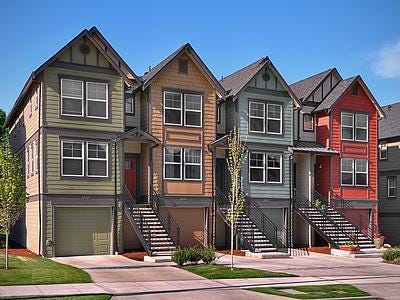
In places where demand is strong and land values are rising, allowing more density means more homes can be built on the same amount of land—bringing down the relative cost per unit even as land itself becomes more expensive.
So, we’ve established two things. Affordability is about prices relative to incomes, and rising housing costs are largely driven by land values. The next question is what that implies for affordability.
We can trade land for affordability
The price of a home and a developer’s profit are not the same thing. When developers are allowed to build more densely—putting more homes on the same amount of land—they can produce units that are less expensive on a per-unit basis while still maintaining their margins. Lower per-unit prices don’t necessarily mean lower returns.
This is where the financial constraints argument weakens considerably. Investors don’t need housing prices to rise indefinitely; they need to be able to deploy capital at sufficient scale and clear their hurdle for risk adjusted returns. Allowing denser development allows developers to satisfy those criteria while simultaneously providing housing at lower per-unit price points.
We can see this dynamic in practice. In 1998, Houston reduced minimum lot sizes inside the city’s inner loop from 5,000 square feet to 1,400 square feet, later expanding the reform more broadly. The result was a boom in small lot townhome construction—exactly the type of housing the reform made possible.
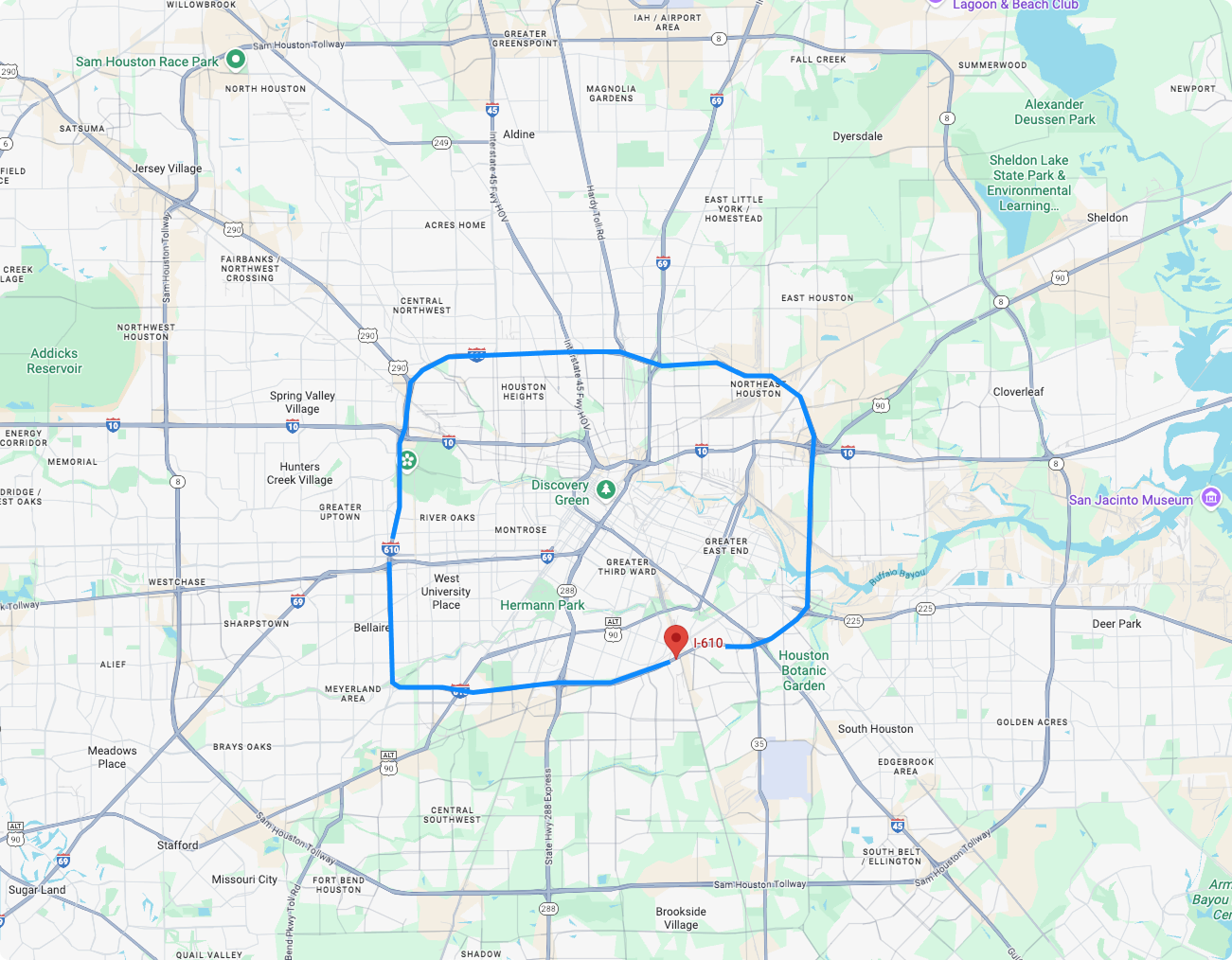
In a write up on the ‘98 reform, Pew noted that these townhomes had a median assessed value of $340,000, compared to $545,000 for other new single-family homes in the city—a roughly 37% reduction in price.4 In other words, the same underlying land could support housing at significantly lower per-unit prices without requiring a collapse in existing home values or developer returns.
To be clear, this isn’t a claim that Houston has solved the problem of housing costs or that it gets everything about land use correct.5 What it demonstrates is narrower and more important. Even inside the financialized system we have, legalizing denser housing production reduces per-unit prices through a specific, legible mechanism — reducing per capita land consumption.
Toward a more nuanced conversation
The argument above is intentionally narrow. Deregulation moves the needle on affordability, and the finance critique doesn’t negate that. That said, it doesn’t mean deregulation is wholly sufficient, and few serious housing advocates claim otherwise.
Missing middle development remains difficult to finance. Subsidized affordable housing programs have their own financial challenges. Communities with stagnant labor markets need tools that look different from what works in regulation-constrained, high-demand cities. Those challenges are real and they’re worth talking about. But they’re separate from the question of whether simply legalizing more housing production can produce meaningful impacts on price — and the answer to that question is clearly yes.
By "investors won't fund" I mean the aggregate behavior of a securitized finance system with specific structural requirements to produce minimum yield premiums over treasuries.
Relatedly, this is why waving a magic wand and somehow instituting a nationwide 100% land value tax would be bad (even if it were institutionally possible). Expropriating all the land value that financial assets like mortgages are based on would devalue said assets and then devalue all the other assets built on top (remember mortgage backed securities? Yeah, they’re still around). LVT is generally good policy, mind you. It’s just that the difference between medicine and poison is often a matter of dose.
And, importantly, while removing those limits enables more development, it doesn’t create demand where none exists. Upzoning the middle of Oklahoma won’t turn it into Manhattan. As Alain Bertaud once put it, density is not a design decision.
One common concern with upzoning is that the value of the new building rights just gets capitalized into land prices rather than lowering housing costs. Emily Hamilton looked at that and found no discernible increase in land (i.e. option) value post reform.
Following the 1998 reforms (and a subsequent further lot size reduction outside the inner loop area), Houston enjoyed decades of relative affordability. Post-pandemic, income-to-rent remains stable, income-to-price has deteriorated (though, this is partially driven by climate-change related home insurance costs). All that, however, is beside the point. Our Houston example illustrates a specific mechanism; it’s not meant to claim that Houston’s housing market is some ideal (it’s not) or that the city’s land use policy has been uniformly good (exhibit A: The Katy Freeway).
One tiny nit, I want to add:
Building more units reduces land cost per unit following the curve 1/n.
That means it matters a ton when you go from 1 unit to 2, and still matters going from 2 to 4, but once you get to 6-8 units it is not so impactful. At that point, the binding constraint on affordability of new units is construction cost.
Now, the overwhelming majority of residential land in America is single unit, so just unlocking ADUs and duplexes is an incredible opportunity for almost everywhere.
But it’s just worth knowing that for higher density projects, construction cost is a bigger problem than land cost.
The bit about the logic of density is so basic, but so crucial. I am convinced most normal people think density is a set of aesthetic or social-engineering preferences forced on people, not an almost inevitable outgrowth of the way successful settlements develop.
I like to compare density to buying a taller bookcase or getting an organizer to sit on top of your desk. They are literally exactly the same thing.