

This post is Part III in our series on The Future of Municipal Finance in American cities.
Part I: The Fiscal Crisis Facing American Urbanism
Part II: How Cities Can Pay for the Next Stage of American Urbanism
Part III: Cities Need Their Own Urban Municipal Funds
[LiveStream] Public Wealth for the Public Good. A conversation with Dag Detter.
In Part I, we showed how reliant American cities are on federal monies and made the case that we’re on the verge of those monies going away. In Part II, we argued that cities should adopt a land-centric revenue model to more fully monetize the value they help create and better align infrastructure investment decisions with local economic growth. And in our conversation with Dag Detter, we talked about how cities can manage their real estate holdings like an investment portfolio, generating non-tax revenue to fund the public good. Here in Part III, I want to extend that thinking and consider how cities can build up financial reserves to better weather the inevitable financial storms to come.
Recessions and even local economic declines are, unfortunately, a fact of economic life. When they happen, city revenue drys up and municipal governments are forced to lay off workers, reduce services, and defund programs. But what if they could do the opposite? What if, in a community’s moment of greatest need, local governments could not only avoid furloughs and firings, but also expand essential services, increase subsidized housing production, and support their local economy with a robust program of counter-cyclical spending?
Rethinking the Concept of the Rainy Day Fund
Since at least the 1970s, American cities have had the concept of a rainy day fund. These are savings put aside in the event of a sudden budget shortfall and are typically held as cash or cash equivalents (like treasury bills). These are effectively the local government equivalent of sticking cash under the mattress and usually amount to 5-15% of an annual budget.
While there’s nothing inherently wrong with rainy day funds, they simply don’t represent that much dry powder. Following the Great Recession, U.S. city general fund revenues fell by roughly one-tenth in inflation-adjusted terms, with the decline reaching its trough only years after the recession began. According to the National League of Cities, constant-dollar city general fund revenues did not return to their 2007 pre-recession level until 2019—more than a decade later. At best, these set-asides make a bad situation slightly less bad. In the next phase of American urbanism, cities will need extra resources to make positive-sum investments, not just do damage control.
What I want to propose instead is a municipal version of a sovereign wealth fund — a reserve fund invested in wealth-generating assets distinct from a city’s local tax base. Then, when the local economy contracts, the city has something to draw on besides layoffs, service cuts, tax hikes, or emergency begging from higher levels of government.
The gold standard in this category is the Norwegian Sovereign Wealth Fund, which was established in 1990 to invest the proceeds of the country’s North Sea oil revenue. The fund is now worth over $2 trillion USD and allows the Norwegian government to spend counter-cyclically, maintaining services and investment even when the underlying economy contracts. In the U.S., the Alaska Permanent Fund does the same thing for the residents of Alaska. Other domestic examples include public sector pension funds — of which there are many that actually do an unimpeachably good job — as well as university endowments. Wealth management is not rocket science and we already have public sector and non-profit organizations that manage to do it well.
So, the proposal is for cities to dedicate a portion of revenue to a professionally managed reserve that invests in diversified, return-yielding assets that are non-correlated with the city’s own tax base.1 Getting more into the weeds, a municipal wealth fund should backstop the standard rainy day fund, not replace it. A city could reinvest one portion of the fund’s annual returns while directing another portion into cash equivalents, gradually building up the more liquid part of the fund.
The larger pool of assets could also strengthen the city’s balance sheet and, depending on how those assets are structured, improve its access to credit during a liquidity crunch. Whatever the exact allocation, the point is that a city can deploy its financial assets in ways that ensure it has liquid resources available during a downturn without forcing it to sell longer-term holdings into a falling market
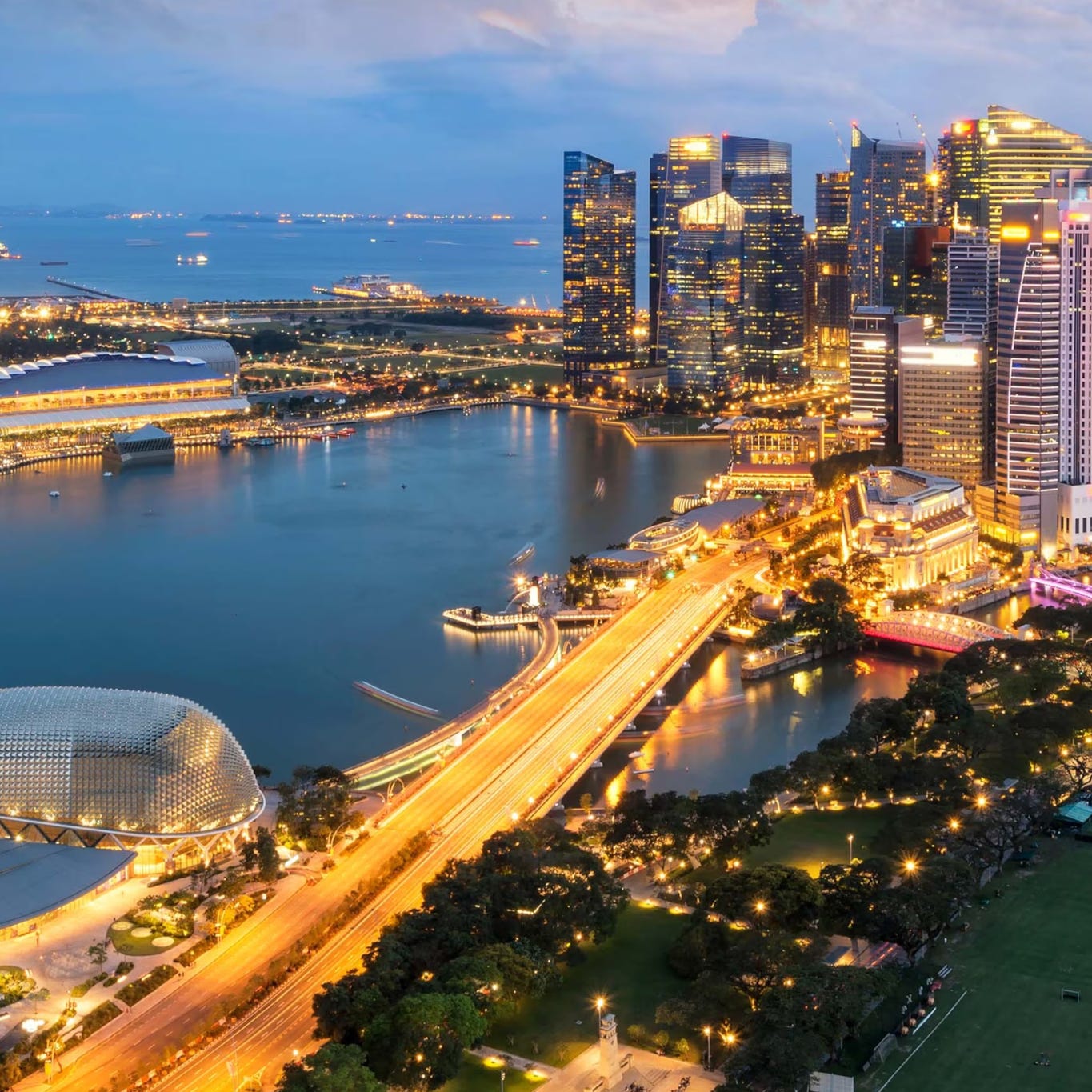
First and foremost, having the financial reserves to avoid layoffs and furloughs during a downturn is counter-cyclical all on its own. Part of that personnel spending would naturally contribute to maintaining local program and service provision as well. Beyond just avoiding pro-cyclical austerity measures, though, the other obvious way for local governments to deploy capital in a downturn is in real estate development.
Land prices dip during recessions. A city with reserves can acquire land and build subsidized affordable housing at a fraction of what it would cost at the top of the cycle. Committing to counter-cyclical construction also smooths the building cycle out for the trades, preventing construction labor from churning out of the industry and becoming unavailable when private market demand spins back up.
It’s important to pause for a minute here and make sure we think about this in the context of the land-centric revenue model we discussed in Part II. Aggressively monetizing land values does two things here: first, it plausibly generates enough revenue that cities could even contemplate having enough left over every year to make this wealth fund idea tractable. Most American cities aren’t exactly raking it in, so this proposal simply makes less sense in the context of the status quo.
Second, extracting revenue from land values is, itself, counter-cyclical. To the extent that the macro-cycle is really the land cycle, land value taxation and public ownership of land prevent capital from bidding up the price of land based on speculative future returns.2 And while there’s a sound logical basis for this (see footnote 2), there’s empirical evidence here as well. After the 2008 financial crisis (which, for the youngsters in the audience, was essentially a nationwide real estate bubble), research showed that jurisdictions with higher property taxes had less extreme run-ups in housing prices. That effect would be even more pronounced under the system proposed in our last post.
How Cities Can Pay for the Next Stage of American Urbanism

Part 1: The Fiscal Crisis Facing American Cities
That’s the policy case for the municipal wealth fund. And as far as policy proposals written by random bloggers on the internet, I think it’s pretty solid. The more obvious objections, though, fall under implementation. So let’s talk about whether municipal governments have the capacity and institutional discipline to manage public wealth effectively.
Putting Policy into Practice
While I think objecting to good policy on the grounds that government simply could never execute it is the worst kind of goal post moving, there’s a reasonable question about whether American municipal governments could all actually manage their own wealth funds. The real answer is that many likely could not. Luckily, there’s already a pattern for this.
State governments often manage public sector pension funds on behalf of their constituent cities. It wouldn’t be much of a stretch for them to do more of the same, but in the form of individual municipal wealth funds. This would help address two problems: administrative overhead and allocation discipline.
The overhead issue is obvious. A local government serving five thousand residents probably doesn’t need to take on a net new competency in the form of portfolio management. So, outsourcing it to the state government and letting everyone get the benefits of the division of labor makes sense.
The other problem this heads off is the issue of time-preference mismatch. Local governments, particularly local political leaders optimizing against election timelines, are poorly incentivized to put away surpluses today in anticipation of need tomorrow (especially when tomorrow is after decision-makers have either left politics or moved on to higher office). By having state governments set contribution and withdrawal rules as well as administer investment accounts on behalf of cities, we can avoid this local-level incentive problem. And, for their part, state governments have every reason to set up cities for fiscal solvency. In a world without the federal backstops, when the next crisis hits, everything will fall on state governments if their cities need a bailout.
Getting the most out of this arrangement, though, requires that state governments (read: legislatures) be unable to raid local government investment accounts for state funding. This type of arrangement can only work if it’s administered by a part of a state bureaucracy that remains insulated from the political day-to-day of the executive and legislative functions. The relevant example is how state pension boards operate, but the overall principle is that fund managers ought to be given a mandate and graded on their ability to deliver results. Bureaucratic independence within the context of politically determined goals is essential.
Note that while I’ve laid out the policy argument, this section on implementation is not meant as a blueprint. At best, this is a guide to thinking about what parameters would matter for program design (who manages the funds, allocation rules, withdrawal rights, etc). The specifics will depend on the particulars of the state and local governments involved and probably have to account for idiosyncrasies of different state constitutions. Additionally, I’ve made no argument as to the politics that would be necessary to put anything resembling this program into place. Throughout this series, I’ve made the case that times are changing and those changes will necessitate new approaches to municipal funding, but structural changes don’t automatically instantiate new policy. That requires people to do the politics required to win the right to govern and actually implement the ideas necessary to meet the moment. There’s much more I could say on the politics of urban reform, but that’s a different topic for a different day (and, possibly, an entirely different publication).
Outro
We live in a time of great change. I say this as someone old enough to remember a time when something as quaint-sounding as the Washington Consensus was a thing and when maybe, just maybe, History had finally come to an end. What’s come to an end, instead, is three generations of American urbanism buttressed by an international monetary system that allowed the U.S. federal government to make a specific set of financial commitments to municipalities across the country. But times are changing and cities will have to navigate a new set of tradeoffs.
I don’t know how to fix the federal government. But what I do know is how American cities can not just survive what comes next, but come out the other side stronger. The old way of funding the public sector is breaking down. What replaces it is already sitting there: tax land instead of buildings, lease public parcels instead of selling them, and invest the proceeds against the fiscal winters yet to come.
Or at least less correlated.
Monetizing land values is counter-cyclical because it automatically raises the cost of speculating on land as land prices rise. During a real-estate boom, investors increasingly buy land in anticipation of selling it later at a higher price. That speculation can create a feedback loop in which rising prices attract more speculative investment, pushing prices increasingly above what the underlying local economy can support. LVT and municipal land leasing act as circuit breakers on this process: as land values rise, so does the cost of holding land, reducing the returns to speculation and dampening the cycle.