

Happy New Year, y’all.
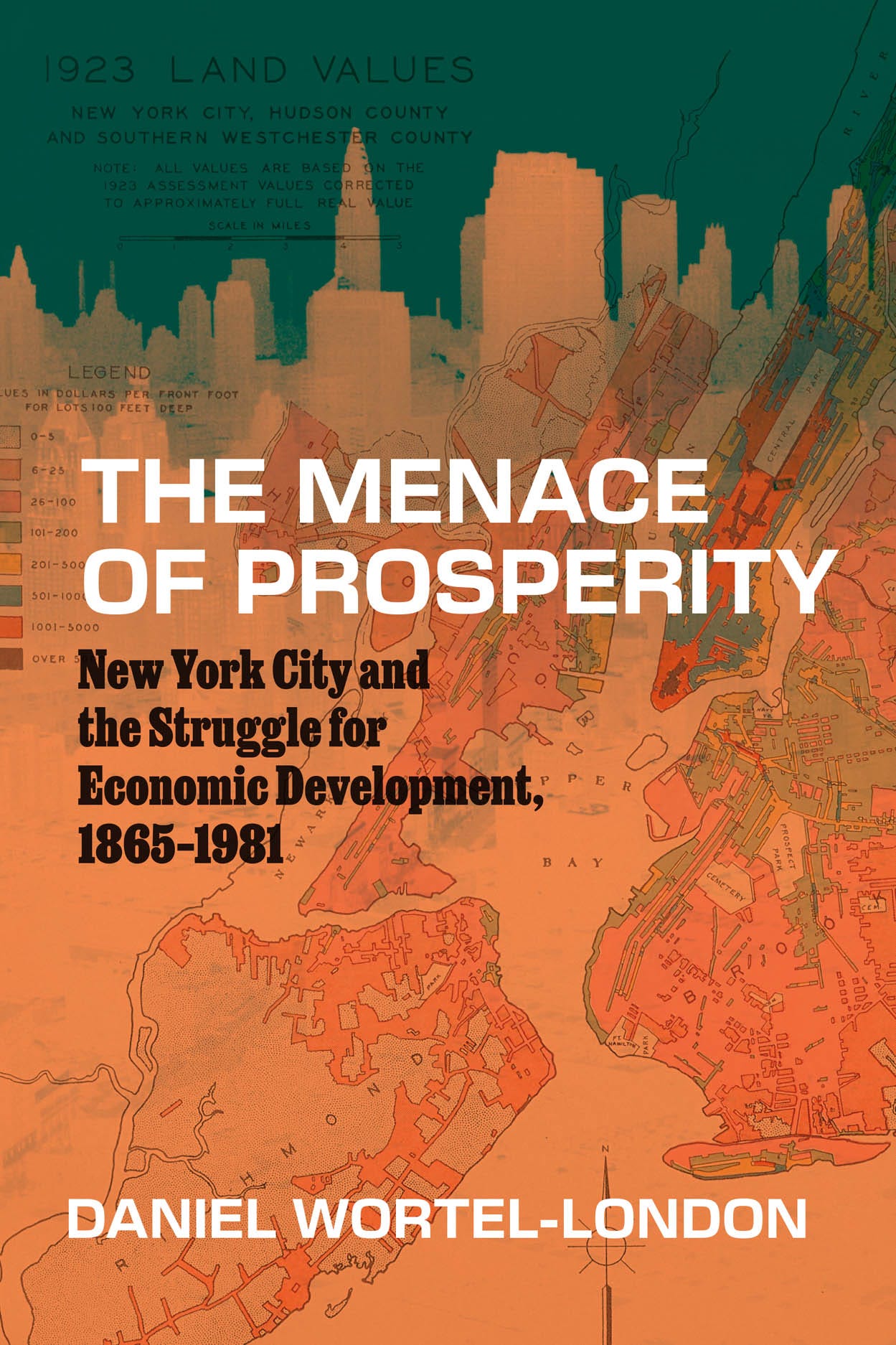
Looking back, my 2025 was nothing if not educational. One of the ideas that’s stuck with me over the break is the question of how we think about building a better world. Some of this was inspired by folks in the Progress Studies community, but the more proximal cause has been reading Daniel Wortel-London’s The Menace of Prosperity.
At first blush, the book is a history of New York’s economic development from 1865-1981. Its deeper contribution, though, is as a history of thought. Daniel explains not only what New York’s policy makers did, but also what they thought they were doing. Learning about the reform movements and public debates of yesteryear got me thinking about where we’re at in present-day. But first, past is prologue.
An Extremely Abridged History of New York City
Going back to the days of colonial rule, the City of New York ran itself in an almost corporate fashion. The municipal government leased out public land, ran profitable monopolies like the local ferry service, and was very much in the business of turning a profit. Fast forward to the late 1800s and the political, legal, and institutional environment had curtailed the city’s ability to operate in this way.
What replaced the for-profit paradigm was a more arm’s length approach to policy. The government licensed out the rights to run monopoly services, rather than running services itself. It also defaulted to selling off public land under the theory that municipal coffers would benefit from both the initial sale and the future property taxes on private (and therefore more efficiently developed) real estate.1
Fast forward through the Great Depression, multiple debt crises, and World War II, and we arrive at the modern era of Federal involvement in local affairs. This period also brought along with it a development strategy that, if you squint at it long enough, looks a lot like addressing urban poverty by simply displacing the poor in favor of the rich (see: slum clearance).
So that’s the “what people did” portion of the history, but, like I said, the more interesting bit is about “what people thought they were doing”.
For a commercial landowner in the late 19th / early 20th century New York, progress meant rising land values. Full Stop. For a non-landowning factory worker or blacksmith, not so much. In fact, many working folks and proto-white collar professionals became vocal proponents for Georgist tax policy.2
After the creation of New York’s subway system, though, the center of public debate began to shift. Transit made land in the outer boroughs accessible and facilitated the creation of a landowning middle class. Homeowners became interested in public investment to increase the value of their homes (and very interested in finding ways to pay for it other than by raising their property taxes).
Disagreement over the definition of prosperity is at the core of New York’s political history. In my view, it’s also at the core of all of our urban policy debates today.
Bringing us out of the book and into the present day, the election of Zohran Mamdani may presage a new phase in the city’s economic thought (though if you want to hear more on that, you’ll need to catch my interview with Daniel, coming out next week.)
The book’s larger lesson is that the definition of prosperity is always a political question. Deciding what it is, who gets it, and why, is as much contest as it is conversation. What’s more, there are ways to answer those questions that bake in a zero sum world and only secure progress for some by imposing poverty on others.
Reflecting on our Modern Reform Movements
Reading the Menace of Prosperity was a bit humbling in that the challenges New York City has faced look eerily familiar. High housing costs, municipal budget crises, and administrative corruption seem to be nothing new in the story of urbanism. Even some of the policy discussions about how to tackle these challenges began to sound disconcertingly present-day.
All this got me thinking about the aspirations and worldviews of the urban reform movements active today. Longtime readers may recall that I serve on the board of YIMBY Action. If you’ve read between the lines a bit, you may have also intuited I’m more than a little friendly to Georgist perspectives. And, to round things out, I have some good friends over in the Strong towns camp from whom I’ve learned a lot.
As someone with something like a foot in each of these tendencies (don’t ask me to do the math there), I’m always fascinated by the amount of nuance between these largely complementary worldviews. Some of this ends up being rhetorical, but just as often there are deeply embedded assumptions about the world that are difficult to tease out (see below).
So, this is what I want to spend the first part of the year exploring: what do present-day urban reform movements mean by prosperity, what do they believe needs to be changed in the world, and how are they going making an impact.
For our YIMBY conversation, we’ll speak with Laura Foote, Executive Director at YIMBY Action. We’ll get the Georgist viewpoint from Lars Doucet and Greg Miller, both of the Center for Land Economics. And to round things out with the Strong Towns perspective, we’ll sit down with Strong Towns board chair Andrew Burleson.
These conversations will be live streamed over the coming weeks and my hope is that, in taking a step back, we can think more clearly about what we’re all doing to build a better future.
As always, my DMs are open if folks have burning questions they want to see asked. Also, if there are other people or organizations y’all would like to see interviewed, I’m open to doing more of these if y’all are willing to make the introductions.
As it turns out, this approach did not deliver on expectations. My interpretation of the history is that this was more a failure of execution rather than strategy, but that could be a whole post on its own.
The Menace of Prosperity even gets into some arcane intra-Georgist theoretical disagreements. Older school radicals saw their mission as the obliteration of land values via expropriative levels of land value taxation. Later, technocratic Georgists would see their role as nurturing the growth of land value through public infrastructure and then skimming just enough off the top to keep the growth machine going.
This is a great book review. Every historian aims to present history as a means of understanding a present-day issue or trend. Executing this is a most difficult task. Your review suggests that The Menace of Prosperity succeeds in this.
I have a few complementary texts to share:
Elizabeth Blackmar, Manhattan for Rent
Robert Fogelson, Downtown